If you’ve ever wanted to make your own Roku channel — showing your live broadcasts or 24/7 TV station stream — it’s easier than you think. You can do it directly using your RTMP Server account.
In this article, we’ll explain step-by-step how to use your existing Wowza-powered stream to create a fully functional Roku app that you can test on your device or even publish to the Roku Channel Store.
Step 1 – Locate your HLS link in the RTMP Control Panel
Every streaming account on RTMP-Server.com includes multiple playback options, such as RTMP, HLS, and HTML5 players. For Roku, you’ll need the HLS (.m3u8) link.
Here’s how to find it:
Log in to your Wowza RTMP Control Panel.
On the left menu, click Widgets & Links.
You’ll see several playback options — copy the one labeled HLS (HTTP Live Streaming) or M3U8 Link.
Once developer mode is enabled, your TV will display a developer web address (for example, http://192.168.1.20) and a password. Keep those safe — you’ll need them to upload and test your channel.
Step 3 – Download the Roku channel template
You’ll need the sample Roku channel files. This is the base you’ll edit to include your own stream.
You can also open main.brs (in the same folder) and replace any similar demo link there.
Step 5 – Customize your channel information
Open the file named manifest in the root of your Roku app folder. Edit it to show your own channel name and description.
Example:
title=RTMP Server Live Channel

description=Live streaming powered by RTMP-Server.com

provider_name=RTMP Server

major_version=1

minor_version=0

build_version=00001
Then, update the images folder with your own logo and splash screens in Roku’s supported sizes:
File Name
Resolution
icon_focus_hd.png
290×218
icon_focus_sd.png
246×140
splash_fhd.jpg
1920×1080
splash_hd.jpg
1280×720
splash_sd.jpg
720×480
Step 6 – Compress and upload your app to Roku
Once all files are ready, compress them for upload:
Windows command example:
cd C:\RokuApp\

zip -r my-roku-channel.zip manifest source components images
Then:
Open your browser and go to the Roku developer web address (for example, http://192.168.1.20).
Log in with username rokudev and your password.
Click Upload, select your zip file, and click Install.
Your Roku will automatically start your channel and play your stream.
If it works, congratulations — your channel is running directly from your RTMP Server stream!
Step 7 – Package and publish your channel
Once you’re satisfied with the test version:
From the Roku developer page, create a signing key.
You’ll receive access to the Wowza RTMP control panel, where you can find your Widgets & Links section and start experimenting with Roku integration right away.
Frequently asked questions
This usually means the stream bitrate is too high for the Roku device or the network. For stable playback use a video bitrate between 800 kbps and 1500 kbps. Lower the encoder bitrate in OBS, vMix, or Wirecast and restart the stream. Always use the HLS (.m3u8) link, not RTMP.
Log in to your Wowza RTMP control panel. In the left menu open Widgets & Links and copy the item labeled HLS or playlist.m3u8. Example:
The latest generation of RTMP servers integrates Wowza Streaming Engine with NGINX load balancing, offering faster global delivery and reduced latency. One of the biggest updates comes from our partner brand Hosting Marketers, which has introduced ad-ready RTMP plans built around VAST and VMAP advertising formats.
Q: Why is ad monetization important for streamers?
With integrated ad standards like VAST 2.0/3.0 and VMAP, broadcasters can insert video ads dynamically—creating sustainable revenue without extra plugins. Hosting Marketers’ new plans make this feature accessible even to small streaming startups.
Q: How does this connect with RTMP Server’s own technology?
Our infrastructure also relies on Wowza and NGINX, optimized for dedicated environments. This shared foundation means that both RTMP Server and Hosting Marketers clients benefit from the same proven stability and codec support.
Are you in the market for an RTMP server? Don’t worry, we’ve got you covered! We’ve compiled a list of the top RTMP servers you can use for your streaming needs. Because let’s face it, choosing the right server can be a real headache.
First up on our list is Adobe Media Server. It’s a high-performance server that’s great for streaming video and audio. But here’s the catch, it’s not free. So if you’re on a tight budget, you might want to look elsewhere.
Next up, we’ve got the Wowza Streaming Engine. This server is like the Swiss army knife of media servers. It’s flexible and can handle live and on-demand streaming like a pro. And the best part? It supports a ton of protocols, including RTMP, RTSP/RTP, MPEG-TS, HLS, DASH, and even WebRTC. But, like Adobe, it’s not free.
If you’re looking for something that won’t break the bank, Red5 is an open-source media server that’s totally free. It’s great for live streaming and supports a ton of protocols, including RTMP, RTSP, HLS, HTTP FLV, WebSocket, and even AMF. Plus, who doesn’t love open-source software? Just an update on this Red5Server was the first hosting with Red5 on all its customers free of charge, unfortunately, this is not possible, red5 needs adobe flash on the browsers to run, and this is not possible as it was disabled in 2017.
Nginx RTMP Module is another great option if you’re on a budget. It’s an open-source module for Nginx that adds RTMP support, and it won’t cost you a penny. It supports RTMP and HTTP FLV, which might be all you need for your streaming needs.
If you need something that supports a wide range of formats, Helix Universal Server might be right up your alley. It supports RTMP, HLS, HDS, MPEG-DASH, and HTTP Smooth Streaming. But, it’s not free.
Unreal Media Server is another option for live and on-demand streaming, and it supports RTMP, RTSP, and HTTP Progressive Download. But again, it’s not free.
If you’re looking for a free, open-source option, MistServer is a great choice. It supports RTMP, RTSP, MPEG-TS, HLS, DASH, and Smooth Streaming.
Evostream is a high-performance server that supports RTMP, RTSP, MPEG-TS, HLS, DASH, and even WebRTC. But, you guessed it, it’s not free.
Flussonic Media Server is a server for live and on-demand streaming, with support for RTMP, HLS, MPEG-TS, DASH, HTTP FLV, and even WebRTC. But it’s not free, and it might be overkill if you don’t need all those protocols.
Last but not least, Ant Media Server is a scalable media server that supports RTMP and WebRTC. It’s also free, which is always a plus.
So there you have it, folks. A rundown of some of the top RTMP servers available. Whether you’re on a budget or need support for a wide range of protocols, there’s an option for you. Happy streaming!
Here’s the updated table with additional information on the protocols available for each server:
Server
Description
Protocols Available
Free or not?
Adobe Media Server
A high-performance server for streaming video and audio
RTMP, HTTP Dynamic Streaming (HDS), HTTP Live Streaming (HLS)
No
Wowza Streaming Engine
A flexible media server for live and on-demand streaming
RTMP, RTSP/RTP, MPEG-TS, HLS, DASH, WebRTC
No
Red5
An open-source media server for live streaming
RTMP, RTSP, HLS, HTTP FLV, WebSocket, AMF
Yes
Nginx RTMP Module
An open-source module for Nginx that adds RTMP support
RTMP, HTTP FLV
Yes
Helix Universal Server
A streaming server that supports a wide range of formats, including RTMP
An open-source media server for streaming video and audio
RTMP, RTSP, MPEG-TS, HLS, DASH, Smooth Streaming
Yes
Evostream
A high-performance media server for streaming
RTMP, RTSP, MPEG-TS, HLS, DASH, WebRTC
No
Flussonic Media Server
A server for live and on-demand streaming, with support for RTMP, HLS, and other formats
RTMP, HLS, MPEG-TS, DASH, HTTP FLV, WebRTC
No
Ant Media Server
A scalable media server for live and on-demand streaming, with support for RTMP and WebRTC
RTMP, WebRTC
Yes
RTMP SERVERS
Note that the “Protocols Available” column indicates the different protocols that each server supports for streaming. Some servers may support additional protocols not listed here, so it’s best to check each server’s documentation for more information.
It is possible to publish your live streamingservices to Facebook using our Stream Targets function on the RTMP Control Panel. Our Stream Targets function on the RTMP Control Panel allows you to broadcast your live streaming services not just to Facebook, but also to various other social media platforms. You need to ask our customer support team to enable it. Open a ticket and you should have your stream connected to Facebook in the next few hours.
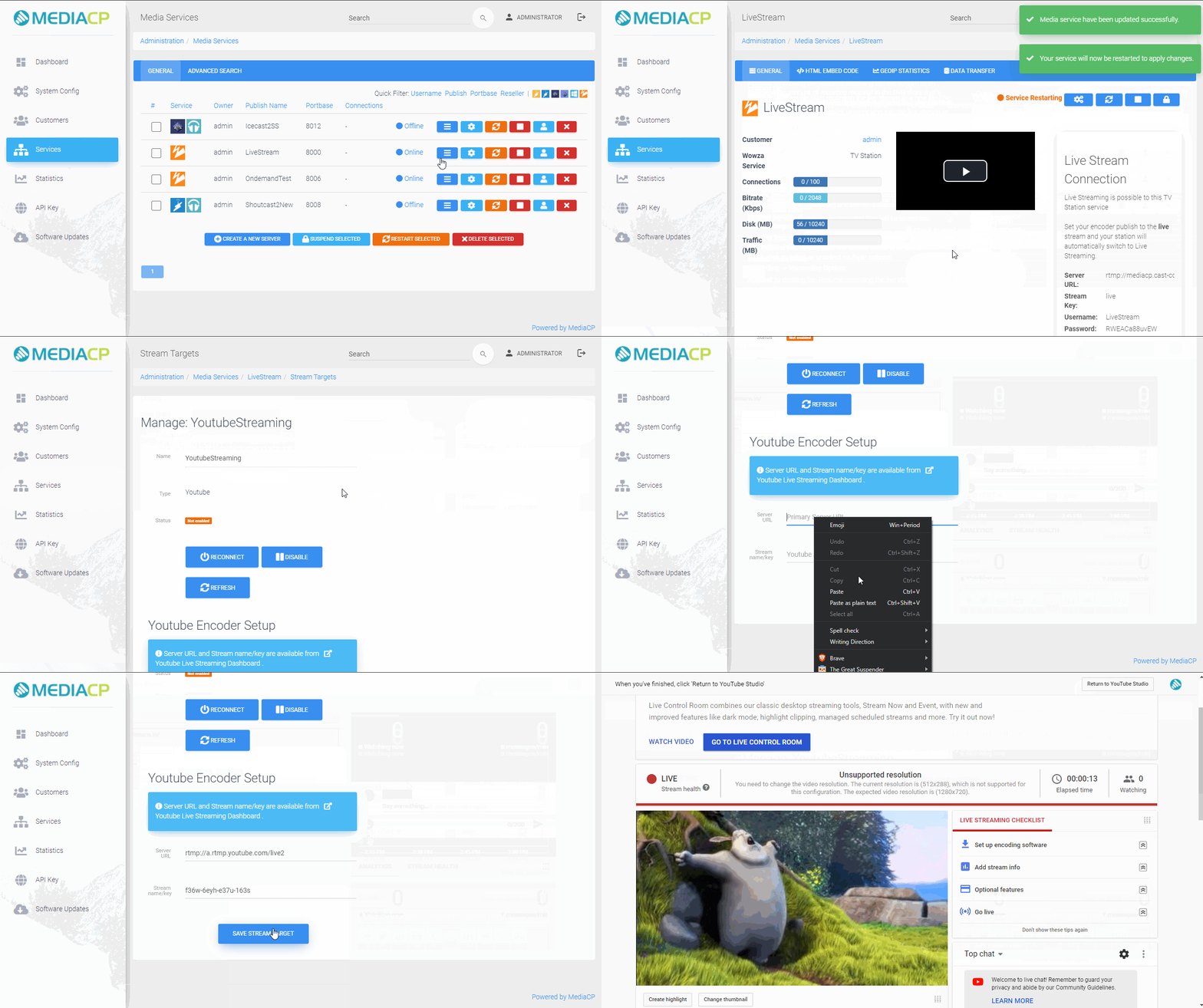
The process is straightforward, the customer support will enable your stream to target Facebook, on the image below instead of youtube, change to Facebook. actually in fact one of the advantages of our system is that it is possible to stream simultaneously to Facebook and to youtube at the same time, in fact, many other social media from a single broadcast from our RTMP Server.
Save & Restart the service to apply the changes. Open Stream Targets
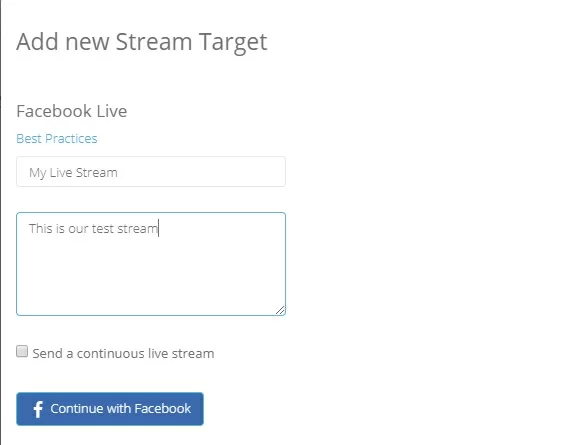
Configure your new Live Stream and press Continue with Facebook when ready. A continuous live stream supports a stream of unlimited duration. Use cases for continuous live include live feeds of aquariums, museums, and zoos. (Before streaming using continuous live, please note that continuous live streams do not generate VOD, do not send notifications to followers, and do not collect video insights for peak concurrent viewers.).
Select where you wish to publish the video, your Timeline, or a Facebook Page.
Your stream should now begin publishing to Facebook
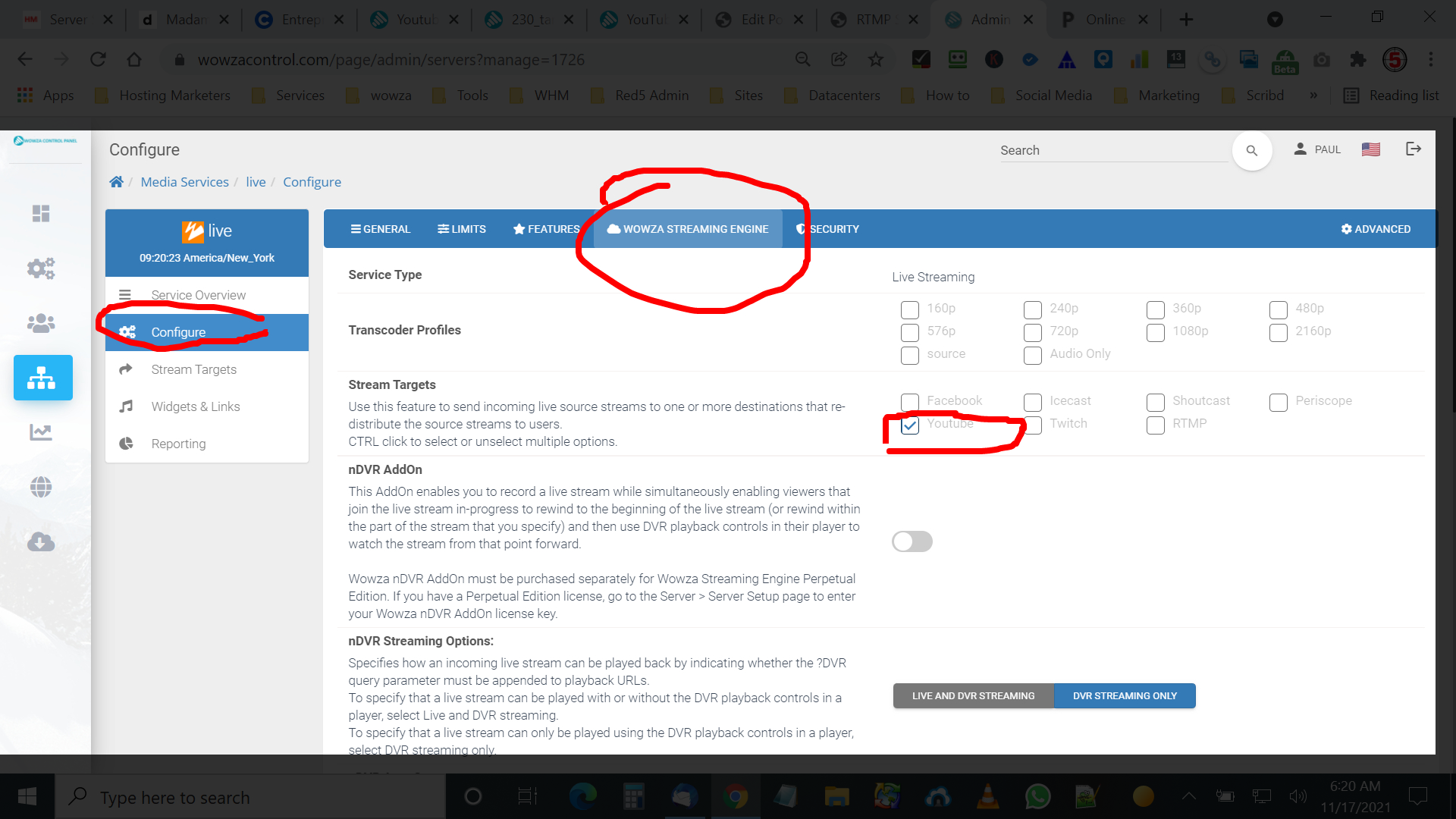
Using our Stream Targets function on the RTMP Control Panel, you can easily publish your live streaming services to a range of social media platforms, including YouTube, Facebook, or a number of other social media. To activate this feature, simply contact our customer support team by opening a support ticket. Once enabled, you can expect your stream to be connected to YouTube or your select social media within a few hours.
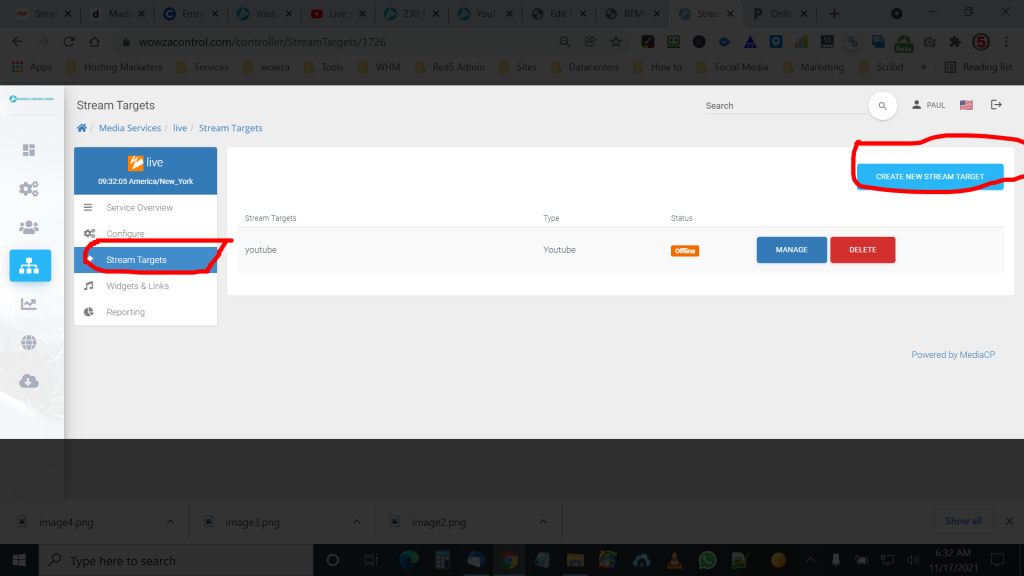
The setup process is user-friendly. Our customer support will configure your stream to target YouTube. As shown in the image below. A key benefit of our system is its capability to simultaneously stream to multiple platforms, such as Facebook and YouTube, from a single broadcast through our RTMP Server. This means you can reach audiences across various social media channels all at once.
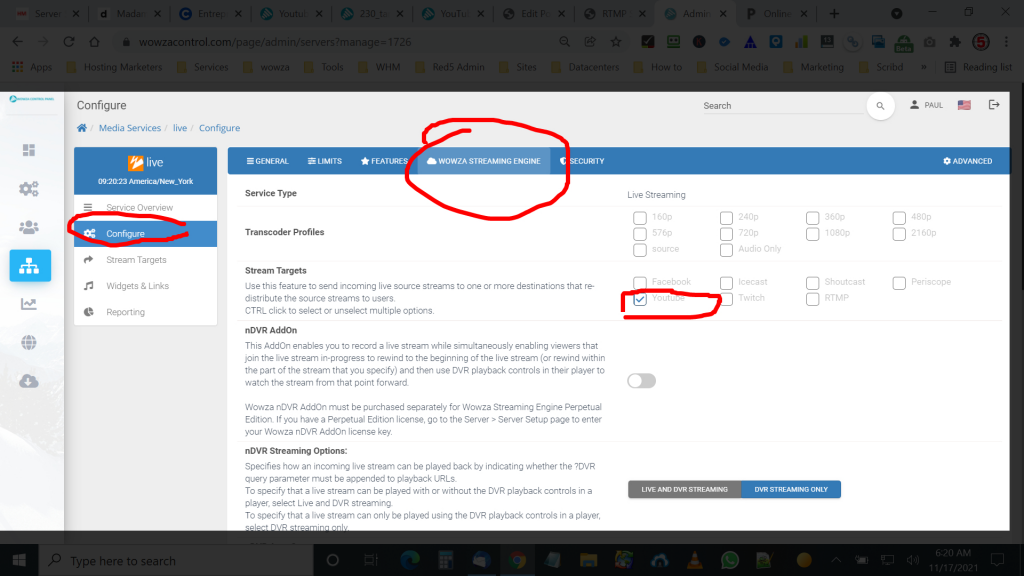
Login to the RTMP control Panel, and Enable Youtube Stream Target under the configuration tab >> Wowza Stream Engine >> Stream Target
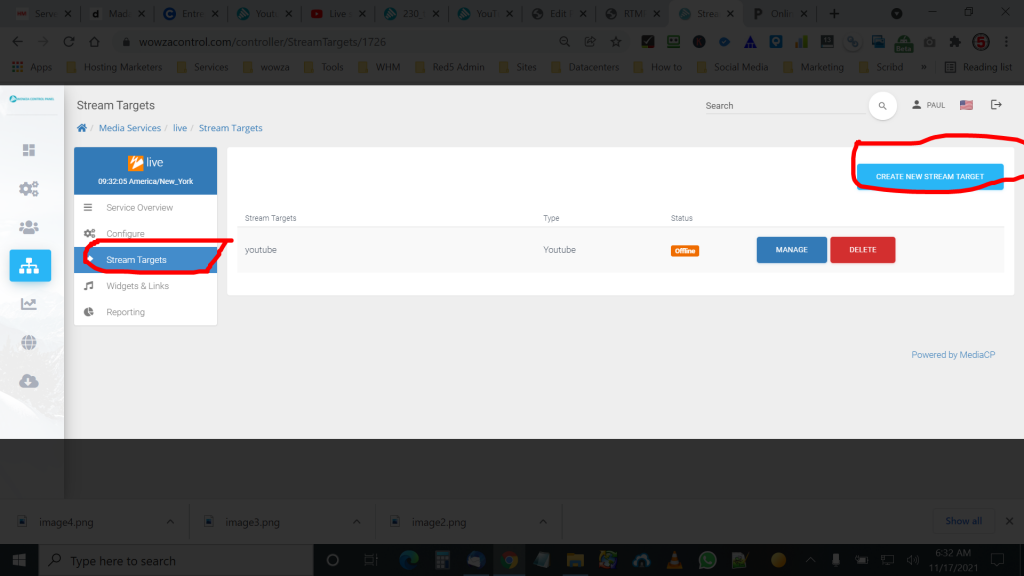
Save & Restart the service to apply the changes. Open Stream Targets
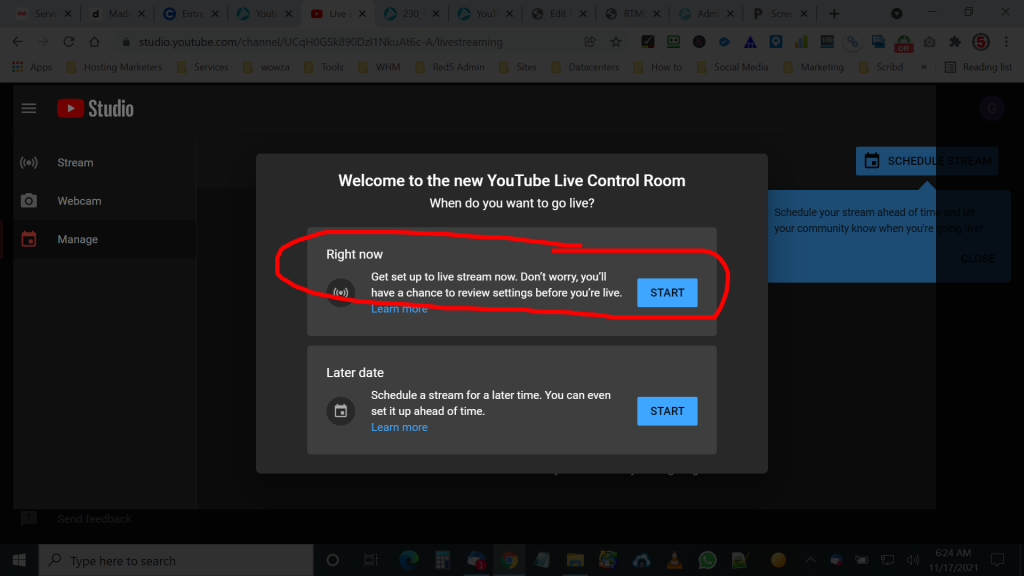
on youtube when you try to start live streaming they have to enable your live streaming, but you will need to be confirmed by phone, and then it takes 24 hours to activation.
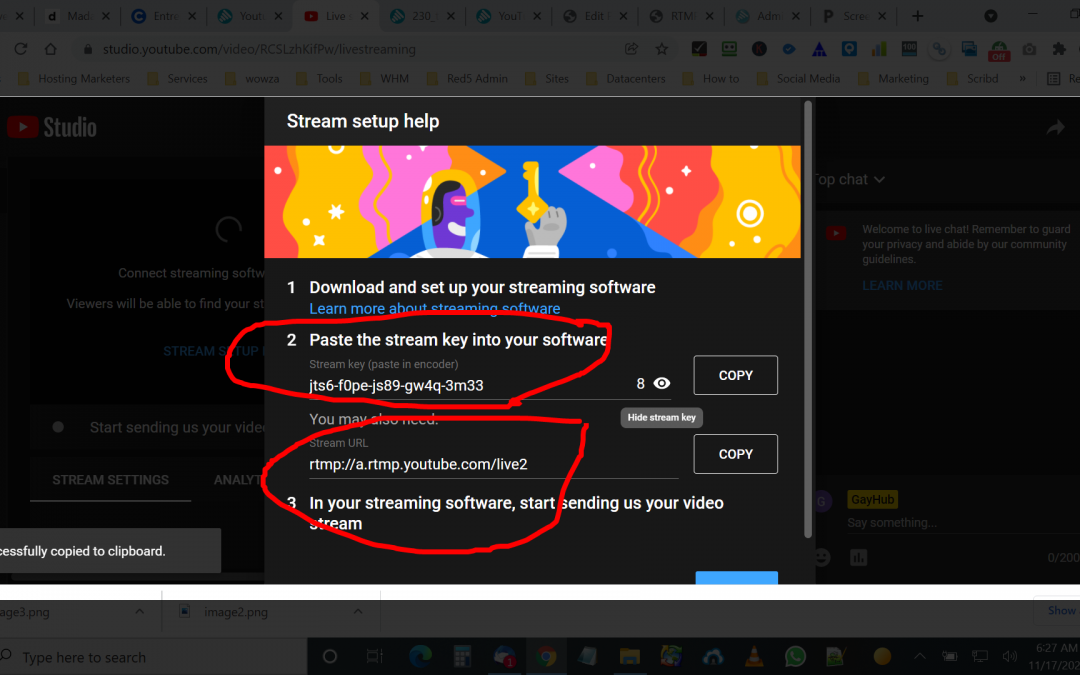
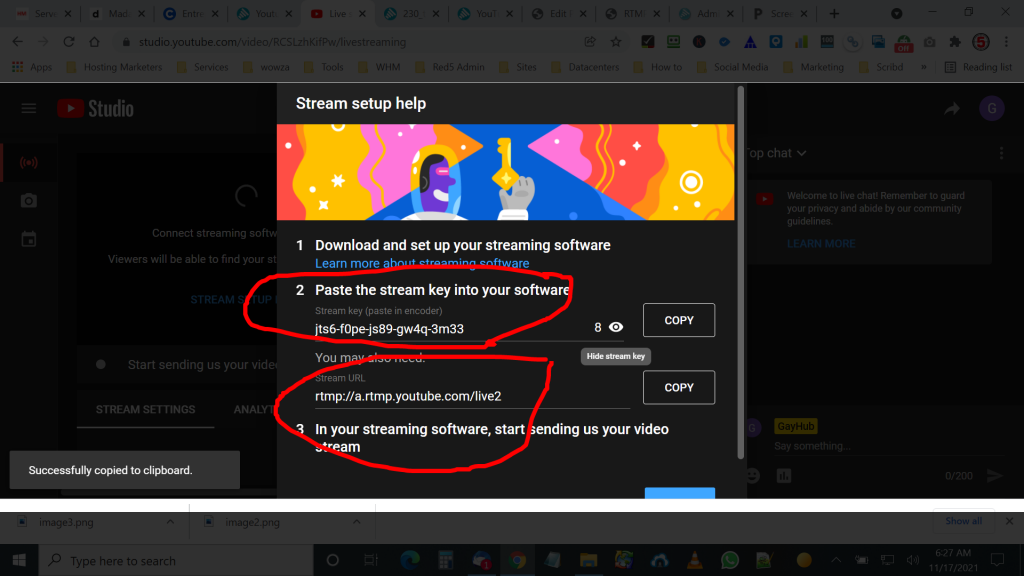
You will need to enter the Server URL and Stream Key from https://www.youtube.com/live_dashboard
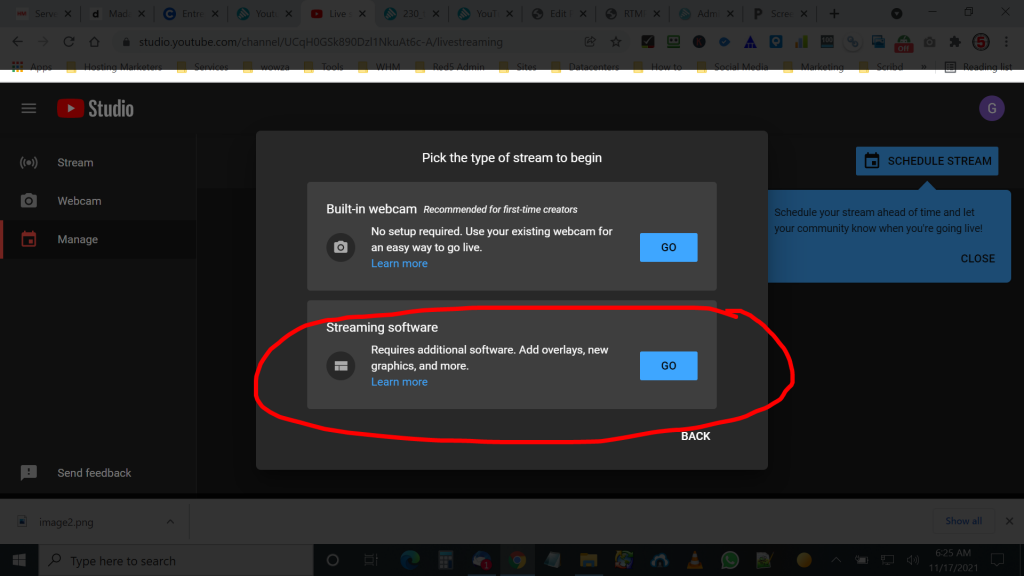
Select Streaming to software
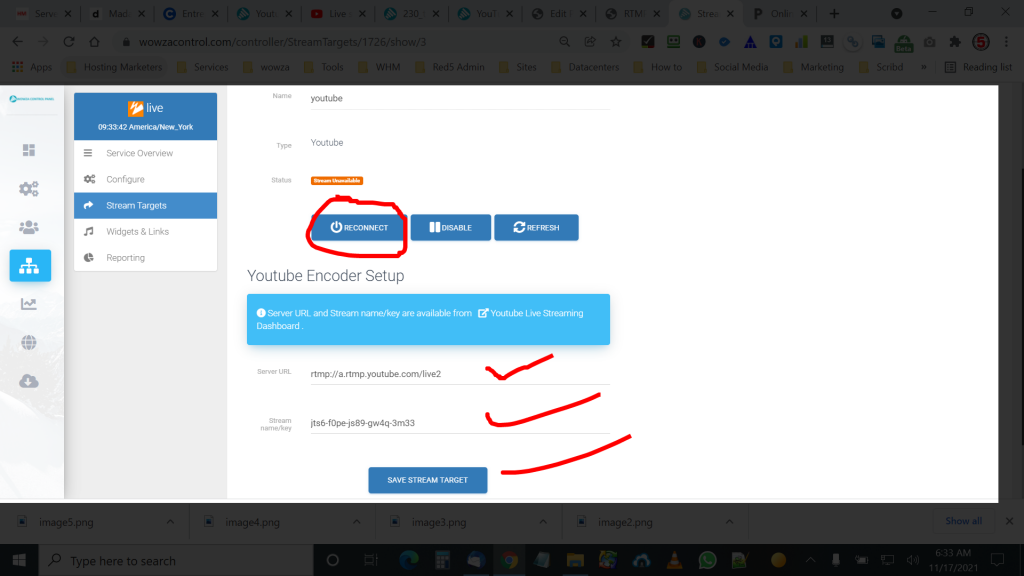
now they will give you a rtmp and a key, copy this to the rtmp control panel
Enter a name for your target, select Youtube, and then Save Stream Target.
This website uses cookies to improve your experience. We'll assume you're ok with this, but you can opt-out if you wish. Cookie settingsACCEPT
Privacy & Cookies Policy
Privacy Overview
This website uses cookies to improve your experience while you navigate through the website. Out of these cookies, the cookies that are categorized as necessary are stored on your browser as they are essential for the working of basic functionalities of the website. We also use third-party cookies that help us analyze and understand how you use this website. These cookies will be stored in your browser only with your consent. You also have the option to opt-out of these cookies. But opting out of some of these cookies may have an effect on your browsing experience.
Necessary cookies are absolutely essential for the website to function properly. This category only includes cookies that ensures basic functionalities and security features of the website. These cookies do not store any personal information.
Any cookies that may not be particularly necessary for the website to function and is used specifically to collect user personal data via analytics, ads, other embedded contents are termed as non-necessary cookies. It is mandatory to procure user consent prior to running these cookies on your website.



Recent Comments